What Your Stylist Is Really Saying When They Hand You That Product Card
Let's be honest. The moment your stylist spins that chair around and you catch your reflection, everything else kind of fades out. The music, the ambient chatter, the sound of your stylist explaining how to maintain your new balayage — all of it becomes background noise. You nod. You say "definitely" when they mention the sulfate-free shampoo. And then you go home and wash your hair with whatever's already in your shower.
We've all done it. But here's the thing: that aftercare conversation your stylist is having with you? It's not a sales pitch. It's not filler. It's actually one of the most genuine things they do — and understanding why might completely change how you treat your hair between appointments.
The Work Doesn't Stop When You Leave the Chair
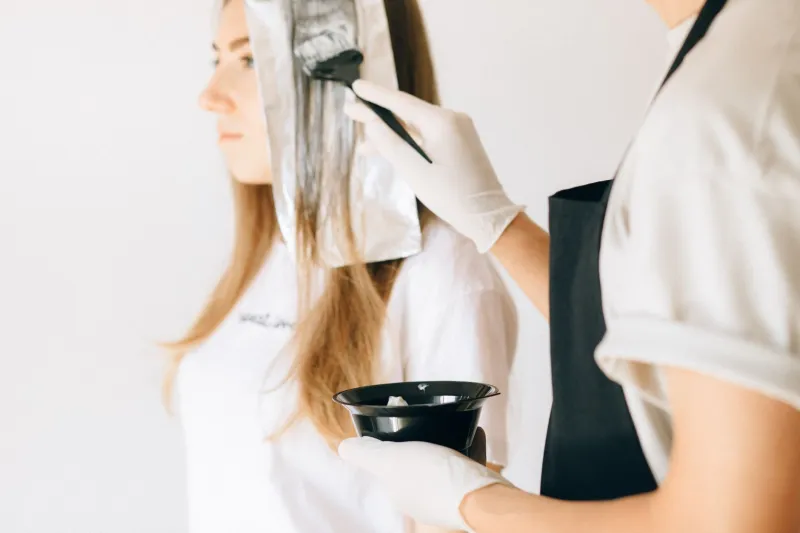
When a stylist finishes a service, they've invested real skill, real time, and real creative energy into what they've created on your head. A precision cut is engineered to fall a certain way. A color treatment is formulated to oxidize and settle over the following 48 to 72 hours. A keratin smoothing treatment needs time to bond to the hair shaft before it hits water.
All of that work is, in a very literal sense, still in progress when you walk out the door. The salon is where the transformation starts. Your bathroom, your pillowcase, your gym bag — that's where it either gets protected or quietly undone.
So when your stylist tells you to wait 72 hours before washing, avoid heat for two days, or sleep on a satin pillowcase, they're not being fussy. They're handing you the second half of the job.
Different Hair, Different Rules — And There's Science Behind All of It
One of the reasons aftercare advice gets ignored is that it can feel generic. But a good stylist isn't giving you the same speech they give everyone. They're reading your hair — its porosity, its density, its current condition — and tailoring their recommendations accordingly.
High-porosity hair, for example, absorbs moisture quickly but loses it just as fast. If that's your hair type, a leave-in conditioner or hair oil isn't optional — it's essential for keeping your color looking vibrant and your style intact. Low-porosity hair, on the other hand, tends to resist moisture and can build up product quickly, which means lighter formulas and less frequent deep conditioning are the move.
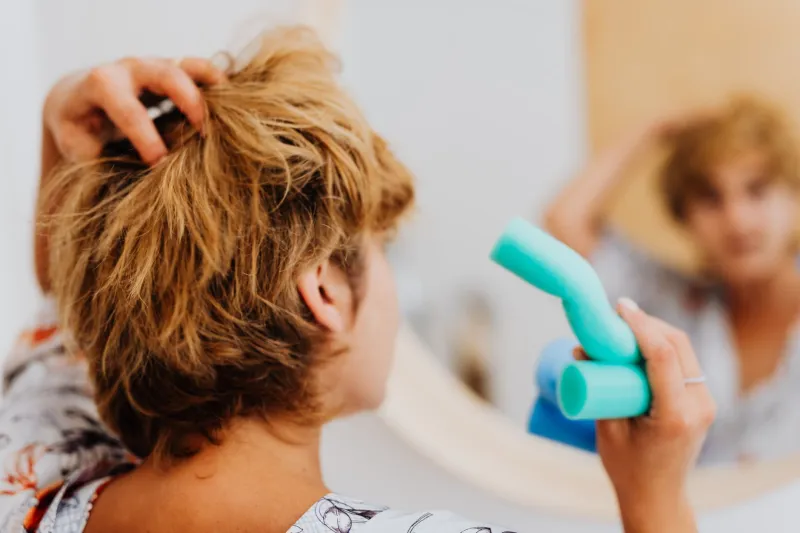
Curly and coily textures have their own set of needs entirely. The curl pattern that looked incredible when your stylist defined it in the salon can revert, frizz, or lose shape fast if you're not refreshing it with the right products and technique. A diffuser isn't just a tool — it's the difference between your curls and a triangle of frizz.
When your stylist walks you through these specifics, they're essentially translating years of education and hands-on experience into a personalized protocol. That's not a small thing.
Why It Feels Like a Love Language (Because It Kind of Is)
Here's a perspective shift worth sitting with: the aftercare conversation is an act of investment. Your stylist isn't required to spend an extra five or ten minutes explaining how to preserve your highlights or which dry shampoo won't strip your toner. They do it because they care about the outcome — and because they want you to walk back in two months looking like your hair has been living its best life, not like it got left out in the rain.
In a service industry built on relationships, that kind of thoroughness is a form of respect. It's your stylist saying, I see you, I see your hair, and I want this to last. Following through on those instructions is a way of saying it back.
That might sound dramatic for a conversation about shampoo. But ask any stylist how they feel when a client comes back with their color beautifully maintained versus completely washed out, and you'll understand quickly why it matters.
The Unspoken Agreement Between Client and Stylist
Every client-stylist relationship has a kind of quiet contract running underneath it. The stylist agrees to show up with skill, creativity, and care. The client agrees to be honest about their hair history, realistic about their lifestyle, and — this is the part people skip — committed to the upkeep.
That last part isn't about perfection. Nobody expects you to become a hair care obsessive overnight. But it is about meeting your stylist halfway. If you went in for a dramatic color transformation and your stylist told you toning shampoo is non-negotiable, skipping it for three months and then being frustrated that your blonde went brassy isn't really a fair outcome for either of you.
The good news is that most aftercare routines aren't complicated. They usually come down to a few key products, a slightly adjusted washing schedule, and maybe one or two techniques that become second nature pretty quickly. The learning curve is real but short.
How to Actually Retain What Your Stylist Tells You
If you're someone who genuinely wants to do better but keeps blanking on the instructions by the time you get home, try a few simple things.
First, ask your stylist to write it down — or text it to you if your salon uses any kind of messaging system. Most stylists are happy to do this and honestly appreciate that you're taking it seriously. Second, take a quick photo of any products they recommend right there in the salon, so you're not trying to remember a brand name three days later in the drugstore aisle. Third, if something isn't working or you're not sure you're doing it right, ask at your next appointment. Stylists would always rather answer a question than redo work that got unraveled at home.
You can also lean on resources like the D. Cole Hair Design blog for tips between visits — because understanding why a routine works makes it a whole lot easier to stick with it.
The Payoff Is Real
Here's the bottom line: clients who follow through on their aftercare consistently get more out of every appointment. Their color lasts longer. Their cuts hold their shape. Their treatments actually deliver the results they were promised. And they spend less money over time because they're not constantly playing catch-up with damaged or neglected hair.
Your stylist's aftercare advice isn't a lecture or an upsell. It's the other half of the service — the part that happens on your time, in your space, with your hands. When you honor it, you're not just taking care of your hair. You're honoring the craft that went into it.
And that's a story worth telling, one strand at a time.