Your Hair Keeps a Diary — Here's How to Read It
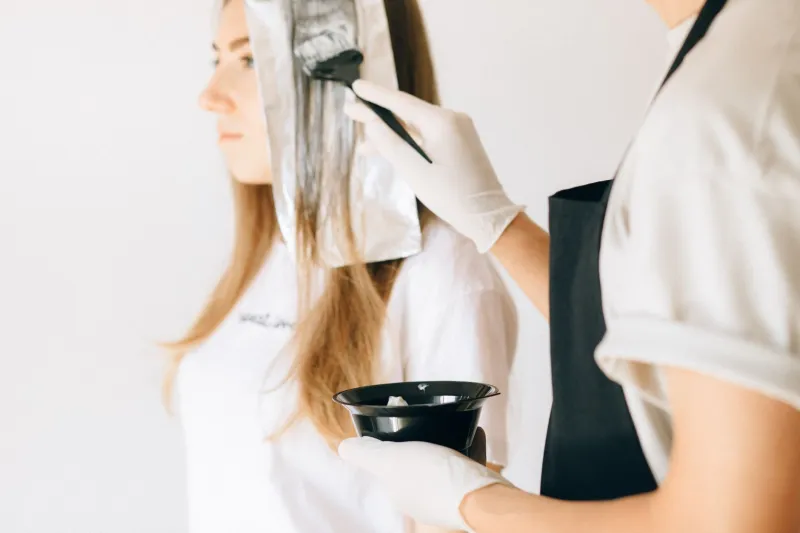
You walk into the salon, sit down in the chair, and your stylist starts doing that thing — running fingers through sections, tilting your head toward the light, lifting strands and letting them fall. It feels like a ritual. And honestly, it is. Because long before you say a word about what's been going on in your life, your hair has already started talking.
Hair is one of the most honest things about you. It doesn't perform. It doesn't filter itself for social media. It just grows — and as it does, it quietly records everything: the month you barely slept, the diet you tried for six weeks, the season your hormones went sideways, the period of grief that settled into your body like weather. A skilled stylist reads all of it.
Growth Patterns Don't Lie
Hair typically grows about half an inch per month. That sounds simple, but what it means is that the hair sitting at your shoulders right now is essentially a two-to-three-year timeline of your body's history. When growth slows or stalls in certain areas, that's a signal worth paying attention to.
Uneven growth — particularly around the temples, the crown, or the nape — can point to a range of underlying factors. Thyroid imbalances, iron deficiency, and prolonged psychological stress are among the most common culprits. So are crash diets. When your body senses it's running low on resources, it redirects energy away from "nonessential" functions. Hair growth gets deprioritized fast.
At D. Cole Hair Design, we see this more often than people realize. A client will come in frustrated that one side grows faster than the other, or that their hair just seems stuck at a certain length. The answer isn't always a new product — sometimes it's a conversation about what's been happening in their life over the past year.
What Breakage Is Actually Telling You
Breakage is one of the most misread signals in hair care. Most people assume it means they need a deep conditioning treatment, and while that can help, it's rarely the whole story.
The location of the breakage matters enormously. Snapping near the ends? That's usually mechanical damage — heat tools used too frequently, aggressive brushing, or hair ties doing quiet violence to the same spot every day. But breakage closer to the scalp, especially when it's widespread, often points to something systemic. Nutritional deficiencies — particularly low protein, biotin, zinc, or iron — can weaken the hair shaft from the root outward. The strand never gets the structural support it needs to survive the length of its growth cycle.
There's also stress-related breakage, which tends to show up in a specific pattern: diffuse thinning across the top of the scalp, with shorter, wispy strands that seem to resist growing out. This is often tied to a condition called telogen effluvium, where a significant stressor — illness, surgery, a major life event, even a difficult emotional season — pushes a large percentage of hair follicles into a resting phase simultaneously. The shedding hits about two to four months after the triggering event, which is why it catches so many people off guard.
Texture Shifts Are a Timeline
If your hair used to be straight and now it's got a wave you never asked for, or your curls have loosened in a way that feels unfamiliar, that's not random. Texture changes are almost always tied to something biological.
Pregnancy and postpartum shifts are the most widely known example — estrogen levels surge during pregnancy, often making hair thicker and more lustrous, then drop sharply after delivery, triggering shedding and texture changes that can last for months. But hormonal transitions don't stop there. Perimenopause, thyroid changes, and even going on or off hormonal birth control can all alter the way your hair behaves at a structural level.
Medications are another underconversed factor. Certain antidepressants, blood pressure medications, and acne treatments are known to affect hair texture and density. It's not always listed prominently on the label, but stylists who work with clients over years start to notice the correlation.
And then there's simply age. The follicles themselves change over time. They can narrow, shift angle, or produce finer strands. This isn't damage — it's biology doing what biology does. But it does mean that the products and techniques that worked for your hair at 25 may need a genuine rethink at 40.
What a Trained Stylist Can Actually Detect
This is where the relationship between client and stylist becomes something more than transactional. A stylist who has been working with your hair consistently builds a baseline — they know what your hair looks like when you're doing well, and they notice when something shifts.
Scalp condition is one of the first things an experienced stylist assesses. Excessive flaking that isn't typical dandruff, sudden oiliness in someone who usually runs dry, or patches of inflammation can all be early indicators of conditions worth addressing — sometimes with a referral to a dermatologist. Hair stylists aren't medical professionals, but they're often the first people to notice that something deserves a closer look.
The porosity of your hair — how readily it absorbs and releases moisture — also tells a story. High porosity hair, where the cuticle is raised and rough, often indicates chemical damage or heat trauma. But it can also reflect a history of nutritional depletion. Low porosity hair, which resists moisture absorption, may just be a genetic trait, but it can also develop in response to heavy product buildup over time.
Even the way hair behaves under tension says something. Hair that stretches slightly before breaking has decent elasticity, which points to adequate moisture and protein balance. Hair that snaps immediately under minimal tension? That's a protein-deficient strand that needs structural support, not just hydration.
Turning What You See Into What You Do
Understanding your hair as a record of your life isn't just a fascinating concept — it's genuinely actionable. When you know that the shedding you're experiencing now is likely tied to the brutal work stretch you had four months ago, you can stop panicking and start recovering intentionally. When you recognize that your texture has shifted because of a hormonal change, you can adjust your routine rather than fighting your hair with the wrong tools.
And when you sit in the salon chair and your stylist starts asking questions that go beyond "how many inches are we taking off today" — questions about sleep, diet, stress levels, recent life changes — that's not small talk. That's a trained eye connecting what they're seeing in your strands to what might be happening in your body.
Your hair has been keeping notes this whole time. The salon is where you finally get to read them together.