Why Changing Your Hair Hits Different Than Any Other Glow-Up

Photo by Photo by Hao Pan on Unsplash on Unsplash
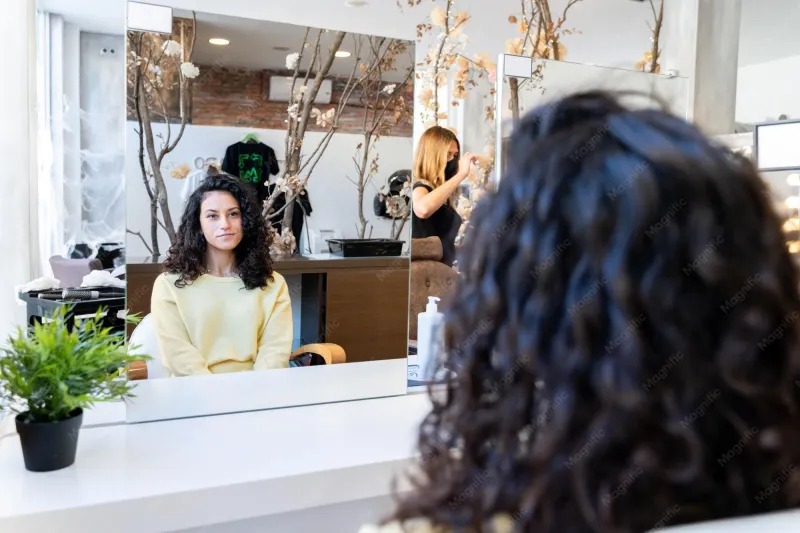
You've probably done it before — stood in front of the mirror after a salon visit and felt something shift. Not just looked different. Actually felt different. Like a version of yourself you'd been circling around for months had finally shown up.
Now compare that to the last time you bought a new outfit. You probably felt good. Maybe even great. But it wasn't the same, was it?
That gap — the one between updating your look and genuinely altering how you move through the world — is what we're getting into today. Because hair transformations aren't just aesthetic events. They're identity events. And the research backing that up is fascinating.
Your Brain Treats Hair Changes Differently
Here's where things get interesting. Neuroscientists and social psychologists have spent decades studying how physical appearance affects self-perception, and hair keeps coming up as a uniquely powerful variable.
When you change your clothing, your brain registers the shift as external — something layered on top of you. Clothes are understood, on a cognitive level, as removable. Temporary. A costume, in the broadest sense.
Hair doesn't work that way. It grows from your body. It's been with you since birth. It's one of the first things people notice and one of the last things they forget. When you change it, your brain has to do something it rarely has to do with a new jacket or a fresh lip color: it has to update its model of who you are.
Psychologists call this process self-concept revision, and it's cognitively taxing in the best possible way. Your brain is essentially reconciling the you it knew with the you it's now encountering. That's not a small thing. That's your identity flexing.
The Mirror Moment Is Real — And It's Not Vanity
There's a reason so many people describe their post-salon experience as emotional. Clients cry. They laugh. They go quiet. They text their friends immediately. These aren't dramatic reactions to a surface-level change — they're responses to something that feels genuinely significant.
Research in social psychology suggests that hair plays an outsized role in what's called the looking-glass self — the idea that we understand who we are partly through how we imagine others see us. Hair is one of the most visible and immediately readable signals we send. Age, personality, cultural identity, professional status, even mood — people pick up on all of it through your hair before you've said a single word.
So when you change your hair, you're not just changing how you look. You're changing the signal. And your brain knows it.
Compare that to, say, a new eyeshadow palette. Makeup is powerful, no question. But it sits on the surface in a way that most people — including you — process as temporary and adjustable. Your hair, especially after a significant cut or color shift, isn't something you can wipe off before bed. It's committed. And that commitment is part of what makes it feel so real.
Why the Change Feels Bigger After a Major Life Moment
Walk into any salon in America and ask the stylists about their most emotionally charged appointments. Nine times out of ten, they'll describe clients going through something — a breakup, a divorce, a new job, a loss, a comeback. Hair changes cluster around transitions because we instinctively understand that our hair is a record of where we've been.
Growing it out. Cutting it off. Going bold with color. Going back to natural. These aren't arbitrary choices. They're punctuation marks in the story of who we're becoming.
Clothing can symbolize a new chapter, sure. But hair embodies it. When you cut off two years of growth, you're not just getting a haircut — you're physically releasing a version of yourself. That's a ritual. Cultures all over the world have understood this for centuries. From coming-of-age ceremonies to mourning traditions to rites of passage, hair has always been the body's most expressive archive.
The Social Feedback Loop Is Faster
Another reason hair transformations hit harder? The response you get is immediate and unavoidable.
You can wear a new dress and some people will notice, some won't. But walk into work with a dramatically different haircut and almost everyone clocks it. Comments come fast. Questions follow. People want to know if you like it, what made you do it, whether it's permanent. That level of social engagement creates a feedback loop that reinforces the sense that something significant has happened — because socially speaking, it has.
This is different from the relatively quieter response most other aesthetic changes generate. Hair change is a social event as much as a personal one, and that communal recognition deepens the psychological impact.
The Permission Hair Gives You
One of the most underrated things a great hair transformation does is give you permission — permission to show up differently, to take up more space, to be seen in a new way.
Some clients come in wanting to look more polished for a career change. Others want to feel more like themselves after years of playing it safe. Some are reclaiming something they let go of long ago. Whatever the reason, the chair at a salon is often where people give themselves the green light to change.
That's not something a shopping trip tends to offer. Retail therapy has its place, but it rarely comes with the same sense of intentional transformation. When you sit down with a stylist, talk through what you want, and then watch it happen — that's a collaborative act of reinvention. It's personal. It's specific to you.
What This Means for How You Approach Your Next Appointment
Understanding why hair changes feel so significant isn't just an interesting exercise — it actually changes how you might approach your next visit.
Be honest with your stylist about what's driving the change. If you're going through something, say so. A good stylist isn't just cutting hair — they're helping you translate an internal shift into something visible and real. The more context they have, the better they can help you get there.
Also: give yourself time to sit with the result. The first few days after a significant change can feel disorienting. Your brain is still catching up. That's normal. It doesn't mean the change was wrong — it means it was real enough to matter.
And if you walk out of the salon feeling like a slightly different version of yourself? That's not your imagination. Something actually shifted. Science says so.