Your Stylist Knows Something You Don't: The Quiet Art of Reading a Client
Photo: NdaniTV, CC BY 3.0, via Wikimedia Commons
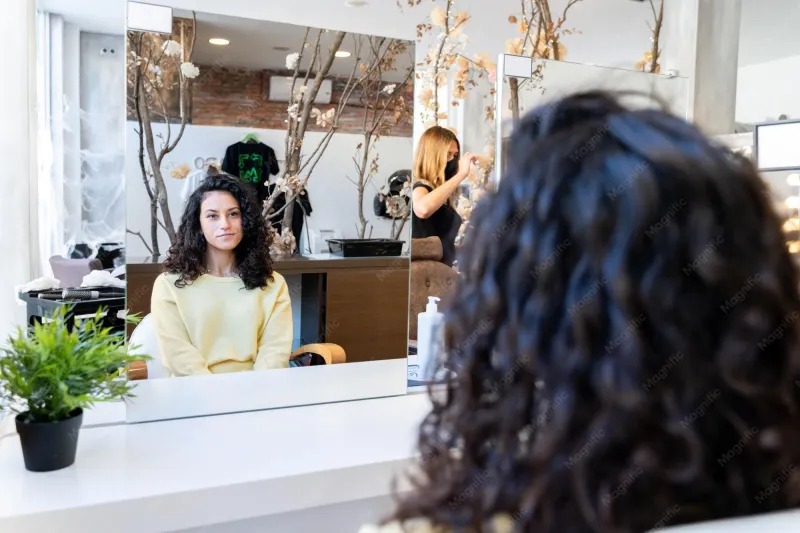
You sit down in the chair, drape goes around your shoulders, and before you've even decided whether to go shorter or stick with your usual trim, your stylist has already started reading you. Not in a creepy way. More like a quiet, practiced attentiveness that comes from spending years watching people at their most unguarded — staring at their own reflection, trusting someone else with something as personal as their hair.
It sounds a little mystical when you put it that way. But ask any seasoned stylist, and they'll tell you the same thing: the chair has a way of revealing people. And often, the client is the last one to notice what's changed.
The Mirror Doesn't Lie, But It Does Distract
Here's something interesting about salon mirrors — clients tend to focus on their hair, while stylists are watching everything else. The way you carry yourself when you walk in. Whether your posture is open or collapsed. If you make eye contact easily or keep glancing away. These aren't things stylists are trained to analyze in a clinical sense, but over time, the patterns become impossible to ignore.
A client who usually bounces through the door with opinions and energy suddenly goes quiet. Someone who always asked for bold, dramatic color starts requesting something more subdued. A person who never used to flinch at change starts hesitating over every decision. These shifts don't happen in a vacuum. They're signals — and a stylist who's been working with you for a year, two years, five years, has enough context to notice when something's off.
Psychologists call this kind of observation "thin-slicing" — the ability to make accurate assessments from very small slices of behavior. Your stylist might not know the term, but they're doing it every single appointment.
Why the Salon Chair Creates Unusual Intimacy
There's a reason people end up telling their stylists things they haven't told their closest friends. The setup is almost engineered for it. You're physically still. You're looking at yourself — which tends to prompt self-reflection whether you want it to or not. You're in the hands of someone you trust. And unlike a therapist's couch or a doctor's office, the salon doesn't carry the same emotional weight or social stigma. It feels casual. Safe.
Social researchers have long noted that service relationships that involve physical proximity and regular, repeated contact often evolve into something more layered than a simple transaction. Your stylist isn't your therapist, your best friend, or your life coach — but they occupy a unique space that overlaps a little with all three. They see you across seasons, across haircuts, across years. That kind of longitudinal view is rare.
And because hair is so deeply tied to identity and self-expression, changes in how you want to wear it are almost always connected to something bigger happening beneath the surface.
What Stylists Actually Pick Up On
So what are the specific things that tip a skilled stylist off? It varies, but some of the most common signals include:
Texture and scalp condition. Stress has a very real, very physical effect on hair. Increased shedding, a change in texture, or a suddenly dry or irritated scalp can all be indicators that something's going on hormonally or emotionally. A stylist who knows your hair's baseline will notice these changes before you've connected the dots yourself.
Decision-making patterns. Are you suddenly indecisive about a cut you've gotten a dozen times? Or maybe you're swinging in the opposite direction — throwing caution to the wind and asking for something dramatic with zero hesitation. Both extremes can signal a shift in how you're feeling about yourself and your life.
Posture and body language. The way someone holds themselves in the chair is telling. Pulled-in shoulders, a tucked chin, avoiding the mirror — these aren't just nervous habits. Over time, they can indicate a dip in confidence or an emotional low. Conversely, a client who usually shrinks suddenly sitting up straighter, making eye contact, asking for something bold? That's often someone stepping into a new chapter.
What they ask for versus what they actually need. Sometimes people come in asking for a small trim when what they really want is a complete overhaul — they just haven't given themselves permission yet. A good stylist learns to ask the right questions and listen to what's underneath the initial request.
The Relationship Goes Both Ways
This kind of attentiveness isn't just professionally useful — it's genuinely caring. The best stylists aren't mining their clients for emotional data. They're simply paying attention because they actually give a damn about the people in their chairs. That distinction matters.
And when a stylist gently checks in — "You seem a little quieter than usual today, everything okay?" — it can unlock something. Not because they're trained counselors, but because being seen, truly seen, by someone you trust is powerful. Sometimes that simple acknowledgment is the thing that makes a hard week feel a little more manageable.
At D. Cole Hair Design, this is something we think about a lot. Hair transformation is never just about the hair. It's about how you walk out of here feeling versus how you walked in. That's the work we're actually doing.
The Confidence Code You Didn't Know Was Being Written
Here's the part that might surprise you: your stylist's observations can actually be a gift, if you're open to receiving them. Not as unsolicited commentary on your emotional state, but as a reflection — an outside perspective from someone who has a genuinely unique vantage point on who you've been and who you're becoming.
If your stylist ever mentions that you seem different — lighter, more confident, more tired, more unsettled — take a moment to sit with that instead of brushing it off. They're not projecting. They're pattern-matching across dozens of appointments, and more often than not, they're right.
The chair has a way of holding your history. And a great stylist has a way of honoring it, even when you've forgotten it yourself.
So the next time you settle in for your appointment, know that you're not just getting a haircut. You're showing up, in every sense of the word — and the person behind you with the scissors is paying closer attention than you realize. In the best possible way.